I’m often asked how the Solution Focused Approach can be used in groupwork, so I thought I’d share some ideas from my own practice.
These are not a recipe for running a Solution Focused group. Rather, they are some possibilities, exercises and principles that I have found useful over the years.
About groups and groupwork
A group:
* has members who may or may not know one another;
* may or may not want to be there;
* consists of people with their own individual aspirations;
* contains different levels of motivation and willingness to participate.
Groups are not necessarily teams. They can be, of course, but teams usually already have some kind of shared direction, purpose — or even a shared conflict! A group may have none of these.
As in individual Solution Focused work, the practitioner working with a group is fundamentally in the unknown.
It is also quite possible that participants will not want to cooperate, particularly at first, or will not want to expose themselves individually. This can be especially true with adolescents. At the same time, they may be very interested in getting to know the other people in the group.
The facilitator’s task is therefore not to “make” the group engage. It is to communicate that the group owns the work.
Once participants begin to take ownership, the rest of the Solution Focused process can become surprisingly straightforward. It is rather like building a contract with an individual client: once you have agreed where you are going, you can begin the solution focused process.
Compared with individual work, groupwork:
* may appear slower at each stage of the Solution Focused process — there may be more time needed for contracting, preferred futures, exploration, etc.;
* has a group dynamic that inevitably influences the process: some people will be more vocal, some more reflective, some more willing to engage than others;
* carries the risk that individual participants can get lost in the process if the facilitator focuses too heavily on keeping the group moving;
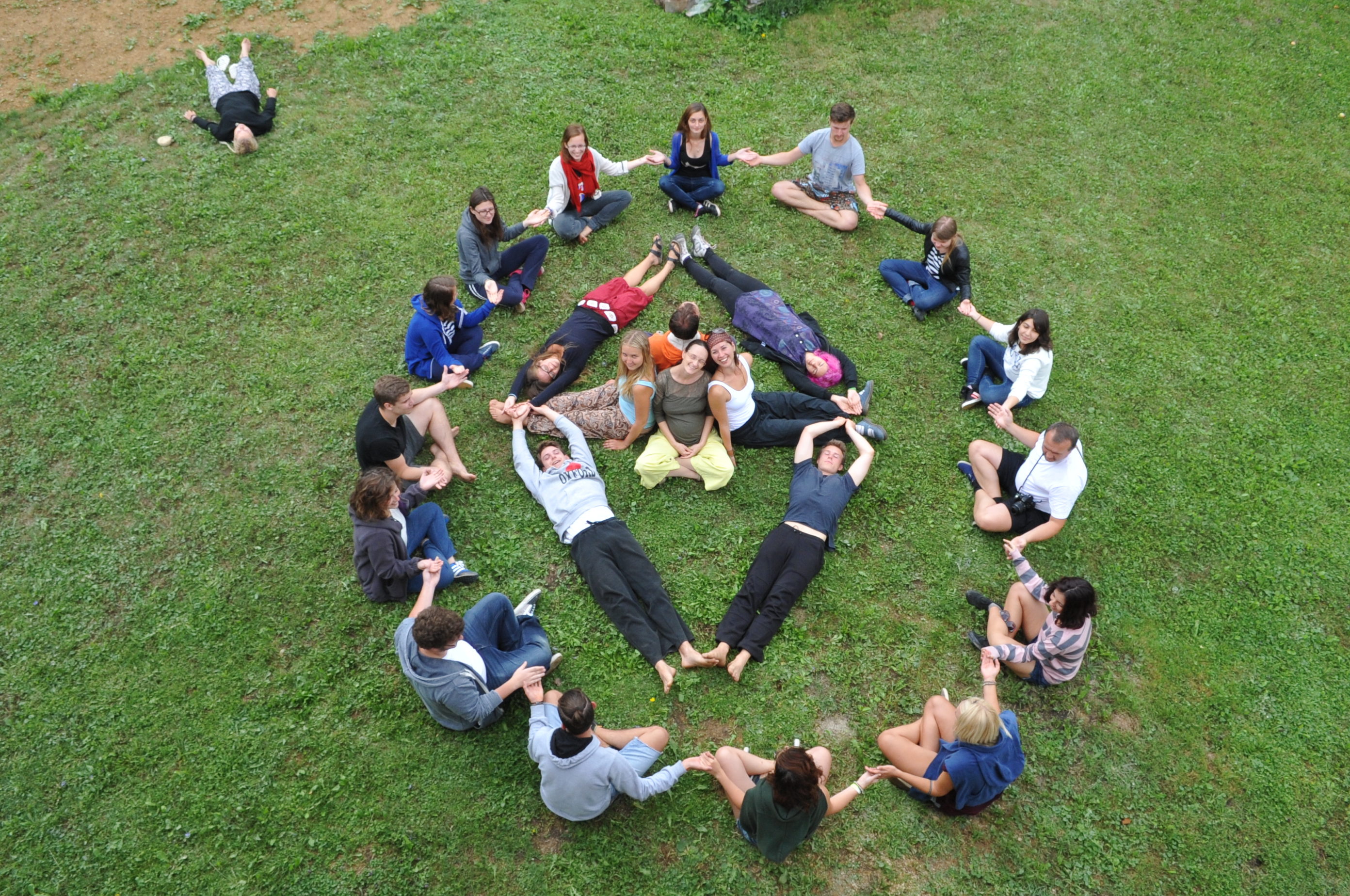
* can also bring enormous pleasure and reward. Once the contract is established — including both the group’s common agreement and people’s individual hopes — the group often begins to do much of the work itself. The practitioner can step back, facilitate the process and hold the space.
Below is an example of a whole Solution Focused group process. It is actually quite rare to have enough time to run a complete Solution Focused process, so you may want to select whatever is useful for the particular group, context and purpose. These exercises have developed through plenty of failures, experiments and some successes with very diverse groups.
Groupwork can accommodate almost any facilitation style you enjoy. If you like music, use music. If you like people moving around, get them moving. If you like cards, pictures, drawing or objects, use them.
What seems to matter most is being transparent about what you are inviting people to do. I find that the language of “inviting” rather than “getting” people to do something makes an important difference.
Then keep the instructions simple and clear.
The aim is to create the conditions in which people experience the facilitator as someone who is with them, rather than someone who is doing something to them. This gives the group space to express its aspirations and needs — and, ultimately, to take ownership of the work.
1. Contracting: building the platform
A. Introductions
When group members do not know each other, or do not know each other well, you might begin by asking people to:
* Find a partner you don’t know (or don’t know well).
* Think of one thing you are really pleased about.
* Introduce yourself to your partner: your name, what you do or where you come from, and share what has gone well for you. Your partner will do the same.
* Then turn to another pair and make a group of four.
* Introduce your partner to the others, transforming what you heard them say into a compliment about them. Others are invited to do the same.
This creates an opportunity for people to begin by noticing what is already going well, while also introducing each other to the group through an appreciative lens.
B. From “I” to “we”
This can work particularly well with groups of up to around 50 people where the common purpose is not yet fully defined.
Invite participants to think individually about:
* What is my hope for this event?
* What is my hope from this event? In other words, how will I know it has been useful when I am back home?
* What do I need in order to function well in this group?
* What do we need in order to function well together?
Participants first write their thoughts individually.
They then discuss them in groups of four (or five, depending on the size of the group) and identify some “ingredients for common group agreement.”
Each small group chooses one person to share their ideas with the whole group.
The facilitator can then draw these together into a common agreement, while also introducing a “parking lot” for additional suggestions, questions or agreements that have not yet been addressed — or that emerge later.
The important movement here is from “I to we”.
2. Preferred Future
The preferred future can be explored with the whole group, changing partners for each question.
The purpose is not to have people share with the group what they came for or why they are attending. Instead, invite them to explore “what difference it would make” if their hopes were realised.
If working towards individual hopes, the facilitator invites each participant to think of something they want to change in their lives (a useful change). This can be done anonymously. If working towards group’s hopes, the miracle will be replaced with what the group decides to be their desired outcome.
A people carousel works particularly well here: participants face one another, discuss a question, and then change partners for the next one.
For example:
* What is the weirdest question you could ask someone? (warm up, a playful way of introducing the idea of the miracle and creating a lively atmosphere.)
* What in your life is already going well?
* Imagine a miracle happened and what you came here for is already happening. What would be the first sign?
* What would be different for you in your life if this miracle happened?
* What gives you confidence that you have the potential to reach your desired outcome?
* What skills and resources do you already have that might support you on this journey?
* Who would you most like to share your successes with when you return home? How will they respond to it?
* What will other group members notice about you that will tell them you have something good going on?
3. Instances of success
One way of exploring instances of success in a group is through “hot seats.”
This exercise can be adapted depending on whether the group is working towards individual or shared outcomes. It is most useful when there is enough trust within the group already and enough time for everyone who wants to participate to have a turn.
One possible structure is:
* One person presents a case, plan, idea or share their recent success (hot seat nr 1).
* Two or three people ask questions to find out more about it (hot seats nr 2, 3 & 4).
* Everyone else listens and tracks instances of success — evidence of what is already working, what is going well, what resources are already visible.
* When the people in the hot seat have run out of questions, the audience offers appreciative feedback to the person who presented.
The emphasis is on noticing what is already there rather than diagnosing what is missing.
4. Using scales in groupwork
Solution Focused scales are incredibly versatile and can be used for many different purposes.
Perhaps to check with the group where we are during the group process: “On a scale from 1 to 10, where 10 means you are benefiting from this activity exactly as you would like to, and 1 means you are not benefiting from it at all, where are you now?” Answers inform and feed back to group agreement and this can be useful working through group tensions.
You can then explore:
* How come it is not lower?
* What is already making a difference?
* What would be a sign of moving one point higher?
* What might you notice yourself doing differently?
Other possibilities include:
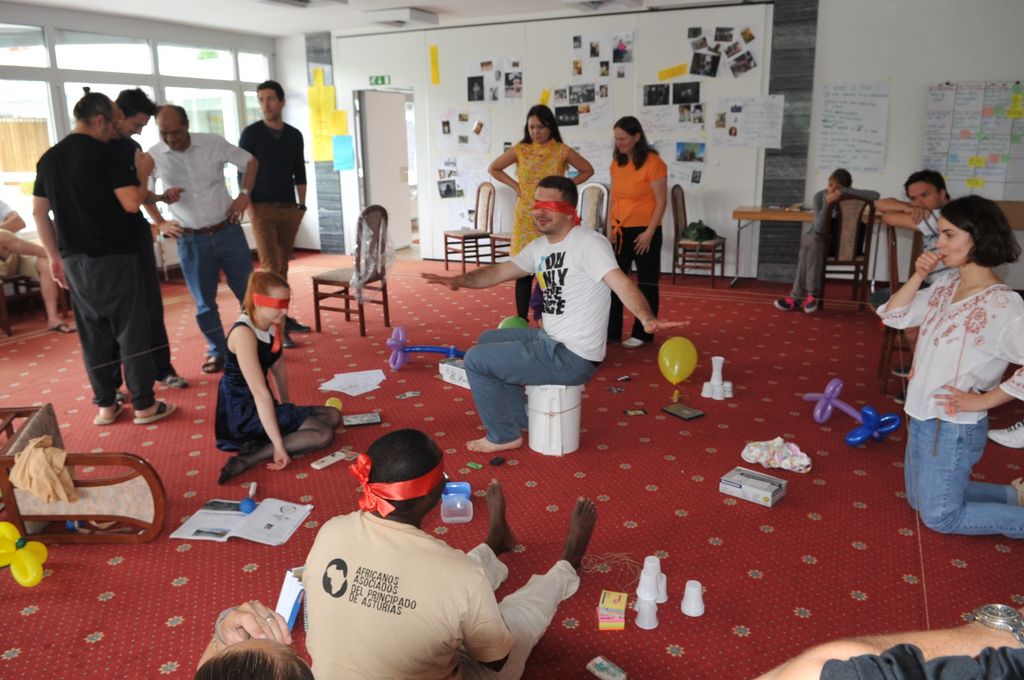
Scaling walks: moving around the room to find people with similar or different numbers and exchanging ideas of how they got to where they are and not being one step lower.
Peer ideas: asking other group members what they have noticed about the participant being at X and not lower.
Tracking footsteps: collectively identifying small signs of progress
The scale is not to be used as an evaluation tool. It can simply become another way of generating useful conversations.
5. Closing
There are many ways of closing a group, depending on where the group is in its life.
A. When a mature long term group is coming to an end
One exercise I particularly like is a simple appreciation activity.
Give each participant a piece of paper to attach to their back. Invite everyone to mingle and write something they appreciate about as many other participants as possible.
At the same time, people will be writing on their own backs, so the key is not to try to keep track of who is writing what.
After around 10–15 minutes, depending on the size of the group, bring everyone back together.
Participants remove their papers and read what others have written.
They can then share these with the group, if they wish.
B. When the group is in crisis and may need to end
Sometimes the group needs to reclaim ownership of what is happening.
One playful way of doing this is to have a cubicle or box containing a set of Solution Focused questions, for example:
* What do we have to get right?
* How will we know we are moving forward?
* What is still working well?
* What would be a small sign that things are becoming better?
* What are we already doing that is useful?
Invite participants to randomly choose questions and throw them to one another.
It is a surprisingly simple activity, but it can rearrange the power relations in the room and return ownership of the process to the group.
C. Final closing
And sometimes the best thing a facilitator can do is to let the group decide how it would like to finish.
It might be a final conversation in a circle, working with symbol cards such as Dixit cards, sharing a favourite moment, or simply creating space for comments, questions and curiosities.
The facilitator’s job is to hold the space rather than determine what the ending should look like.
Finally…
I hope you find some of these ideas useful.
Try it out, adapt them, abandon them, combine them with your own ideas — and, if you discover something that works particularly well, share it with others.
One of the things I love about Solution Focused groupwork is precisely this: the framework and method is not a set of exercises you have to follow. The exercises are simply means of generating useful conversations in which the group can discover what matters to them and what they already have.
And if you would like to sharpen your skills as a group leader and facilitator, I will be running another group work course at BRIEF in October 2026. These courses have consistently generated new ideas and innovations for us and the people who attend. For example, here is one such example.
Wishing you lots of curiosity, experimentation — and, most of all, lots of fun with your groups!
Biba